


Is AI replacing the tools we’re teaching our accounting students?
Posted by Katie Balaam. Last updated: February 5, 2026
The use of AI can be seen as a way to save time and become more efficient, but would you rely on it to choose which companies to invest in? Or would you rely on AI to create your tax return?
Having been in academia for nearly twenty years, I have seen how teaching has changed due to the progression of technology. It has evolved from the use of an overhead projector to handwrite financial statements on acetates to creating alternative media and Excel‑based clips to communicate accounting concepts that can be viewed at a time convenient to the student. Pedley-Smith (2025)Pedley-Smith, S. (2025). Teaching accounting — the impact of generative AI. Accounting Cafe. recently discussed the impact that AI is having on our teaching styles through the use of the large language models.
The academic evolution of AI in accounting reflects a transition from early rule-based expert systems to integrated cognitive technologies that redefine professional roles. While Gray et al. (2014)Gray, G.L., Chiu, V, Qi Liu, Pei Li (2014). The expert systems life cycle in AIS research: What does it mean for future AIS research? International Journal of Accounting Information Systems, Volume 15, Issue 4, 423-451. noted a decline after the late 1990s in traditional “expert system” research, Sutton et al. (2016)Sutton, S.G., Holt, M., Arnold, V. “The reports of my death are greatly exaggerated”—Artificial intelligence research in accounting, International Journal of Accounting Information Systems, Volume 22, 60-73. demonstrated that AI research actually broadened, and intensified when viewed through the lens of modern machine learning and big data analytics.
The practical impacts of this shift are evidenced across various areas:
Operational efficiency: Research by Lee and Tajudeen (2020)Lee, C. S., & Tajudeen, F. P. (2020). Usage and Impact of Artificial Intelligence on Accounting: Evidence from Malaysian Organisations. Asian Journal of Business and Accounting, 13, 213-240. confirms that AI-based software significantly accelerates productivity by automating the high-volume, repetitive tasks.
Human Technology Integration: As AI becomes more prevalent, the focus has shifted toward “technology readiness.” Damerji and Salimi (2022)Damerji, H., & Salimi, A.Y. (2021). Mediating effect of use perceptions on technology readiness and adoption of artificial intelligence in accounting. Accounting Education, 30, 107-130. emphasise that the successful implementation of these tools depends heavily on the perceptions and adaptability of the individuals using them, particularly the next generation of accounting professionals who are learning the tool set to become future accountants.
Navigating a new era with AI
The main objective of an undergraduate accounting and finance degree is to develop practical finance and accounting skills and tools. Secondly, it will prepare students for a professional career in accounting and finance, and often provide eligible exemptions (e.g., ACCA, ICAEW, CIMA) to enable students to accelerate entry into the accounting profession.
However, according to a recent survey by KMPG (2024)KPMG (2024) AI transforming financial reporting globally with near universal adoption expected in the next three years. nearly 72% of surveyed companies are piloting or using AI in financial reporting. KMPG predicts that in three years, the rate will increase to 99% of companies! The speed at which AI is evolving presents educators with opportunities and challenges.
‘Professions have always evolved with technology, but unlike previous technological revolutions that primarily affected manual work, artificial intelligence (AI) directly impacts knowledge work’.
ACCA
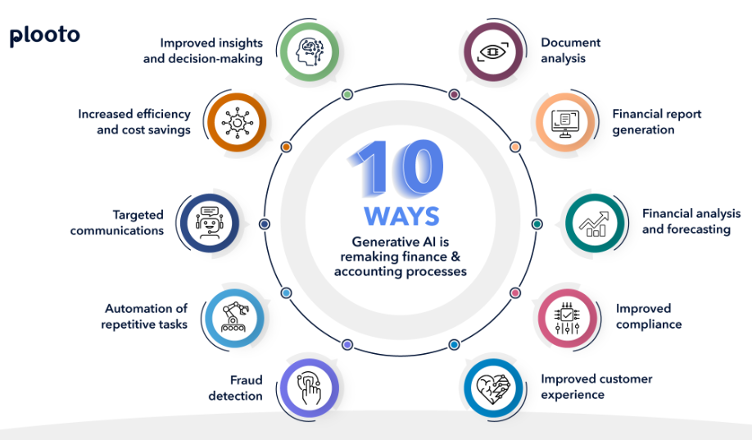
There is a range of generative AI tools that use Natural Language Processing (NLP) to extract key data from a set of documents with inconsistent formats (for example, financial statements, reports, footnotes and invoices), and transform them into structured summarised datasets. AI can generate a narrative by calculating ratios, for example, return on investment, and earnings before interest and taxation, and then identifying trends across years.
A key component of an accounting degree is learning the tools required to create a set of financial statements, and then building on these skills by analysing the information to inform strategic decisions. However, AI can go beyond the financial statements and read the notes, including specific details such as lease obligations and debt covenants. AI can spot unusual patterns or flag outliers that require more investigation.
The speed with which AI can process information as soon as it is released is one of its key advantages. It enables accountants to focus on the more complex areas that require interpretation. The impact on students is that they still require the tools they learn in their degrees, but they now also need to learn how to use AI.
Do our teaching methods need to evolve in 2026?
To support accounting students, educational frameworks emphasise that while AI enhances efficiency, human oversight remains the cornerstone of professional ethics and accuracy. Within a module on the accounting and finance undergraduate degree programme at the Open University, I have introduced a section on the use of AI to raise awareness of its impact on daily life and academic study. Students also learn how AI is used in accounting and the impact it has on the accounting sector.
The majority of accounting and finance degrees give students eligibility to exemptions from professional exams (ACCA, CIMA, ICAS, and CIPFA). These exemptions are not automatic and require students to sit an online proctored exam, during which AI is not allowed. The professional bodies wish to address the increase in AI-assisted cheating concerns and maintain their professional standards. For example, from March 2026, ACCA return to in-person exams with exceptions only where centres are unavailable.
The skills and tools we currently teach accounting students will still be required, however, students must also learn different behaviours as a result of AI. For example, the use of AI to create preliminary data summaries, which can then enable a deeper dive into the data using the skills students have learnt during their studies. The skill set of students is shifting due to the advancement of AI, however, at the moment, professional judgement, that is learnt through studying an accounting degree is still required and is irreplaceable.
AI has the potential to reshape the scope of the accountancy profession by impacting tasks directly and jobs indirectly – distinguishing between these two disparate effects is crucial for understanding how AI is changing the way we work
ACCA
Further reading and resources
Abdulameer, M., Mansoor, M.M., Alchuban, M., Rashed, A., Al-Showaikh, F. and Hamdan, A. (2022) ‘The impact of artificial intelligence (AI) on the development of accounting and auditing profession‘, in Hamdan, A., Hassanien, A.E., Mescon, T. and Alareeni, B. (eds.) Technologies, artificial intelligence and the future of learning post-COVID-19: the crucial role of international accreditation. Cham: Springer, pp. 201–213. Available at: https://doi.org/10.1007/978-3-030-93921-2. (Accessed: 26 January 2026).
de Villiers, C., Dimes, R. and Molinari, M., (2023). How will AI text generation and processing impact sustainability reporting? Critical analysis, a conceptual framework and avenues for future research. Sustainability Accounting, Management and Policy Journal, 15(1), 96-118. Available at: https://doi.org/10.1108/SAMPJ-02-2023-0097. (Accessed 26 January 2026).
Napolitano, G (2023) ‘AI adoption to innovate accounting practice’, 2023 IEEE International Conference on Metrology for eXtended Reality, Artificial Intelligence and Neural Engineering (MetroXRAINE), Milano, Italy, 2023, 1138-1142 Available at: https://doi.org/10.1109/MetroXRAINE58569.2023.10405760. (Accessed: 26 January 2026).
Oliver, B. (2023) ‘How artificial intelligence can help save accounting’, Journal of Accountancy, 15 November. Available at: https://www.journalofaccountancy.com/news/2023/nov/how-artificial-intelligence-can-help-save-accounting/.(Accessed: 26 January 2026).
Pedley-Smith, S. (2025). Teaching accounting — the impact of generative AI. Accounting Cafe. Accessed 26 January 2026. Available at: https://accountingcafe.org/2025/02/10/teach-accounting-using-ai/ (Accessed: 26 January 2026).
Rawashdeh, A. (2023) ‘The consequences of artificial intelligence: an investigation into the impact of AI on job displacement in accounting’, Journal of Science and Technology Policy Management. Available at: https://doi.org/10.1108/JSTPM-02-2023-0030. (Accessed: 26 January 2026).
Saleem, I., Abdeljawad, I., Nour, A.I. (2023). Artificial Intelligence and the Future of Accounting Profession: Implications and Challenges. In: Hannoon, A., Mahmood, A. (eds). Artificial Intelligence, Internet of Things, and Society 5.0. Studies in Computational Intelligence, vol 1113. Springer, Cham. Available at: https://doi.org/10.1007/978-3-031-43300-9_27. (Accessed: 26 January 2026).
Zhang, C., Zhu, W., Dai, J., Wu, Y., Chen, X. (2023). Ethical impact of artificial intelligence in managerial accounting.
International Journal of Accounting Information Systems, Volume 49, 100619. Available at: https://doi.org/10.1016/j.accinf.2023.100619. (Accessed: 26 January 2026).
© Accounting Cafe
Part of the Pedagogy series
Join the Accounting Cafe community

Dr Katie Balaam
Katie is a Lecturer in Accounting and Financial Management at the Open University. She previously worked at the University of Birmingham and Queen Mary University of London. Katie also worked at the University of Buckingham for twelve years as a Senior Lecturer in Accounting. In 2018, Katie obtained her PhD in the field of corporate governance and capital structure from Birkbeck, University of London. Before moving to academia, Katie worked as a financial accountant in the automotive sector and is an FCCA-qualified accountant.
How to cite this article: Balaam, K. (2026) ‘Is AI replacing the tools we’re teaching our accounting students?’, Accounting Cafe, 26 January. Available at: https://accountingcafe.org/2026/01/26/is-ai-replacing-the-tools-were-teaching-our-accounting-students/. (Accessed: [insert date])