


Shaping the future: Rethinking skills development in accounting and tax
Posted by Nicky Thomas. Last updated: June 24, 2026
Nicky Thomas and Stephanie Tiller ask, “How do we help students develop the awareness, adaptability, and reflective capability needed to continually learn throughout their professional lives?”
The accounting and tax profession is evolving at pace in response to technological advancements, regulatory changes and an increased emphasis on professional development.
The new QAA Subject Benchmark StatementSubject Benchmark Statement: Accounting (2025), QAA website highlights the importance of skills development in accounting education, and the professional accounting bodies are also adapting their approaches to assessment to incorporate these competencies.
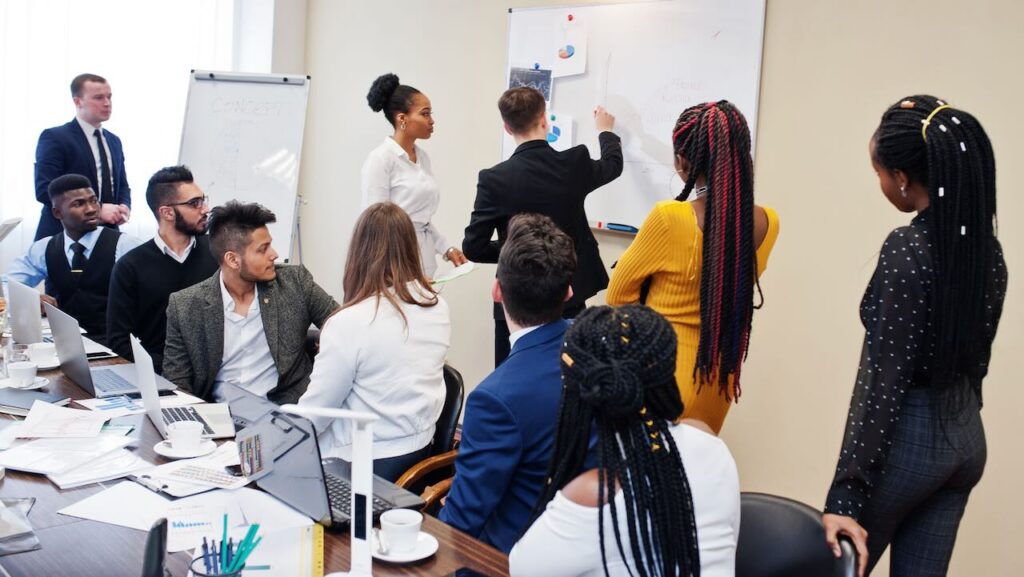
We hosted a collaborative skills-focused workshop that brought together 40 accounting and tax experts from academia and industry, professional bodies and students. Throughout the session, discussions repeatedly returned to a broader question: how do we help students develop the awareness, adaptability, and reflective capability needed to continually learn throughout their professional lives?
This challenge within accounting education is unlikely to be addressed by individual educators or institutions working in isolation. Instead, it calls for greater collaboration, shared dialogue, and a collective sense of purpose across the accounting community. As a starting point for that conversation, we’re taking this opportunity to share the following themes that emerged from our workshop discussions.
Ownership: Taking charge of your career direction
Workshop insights highlighted the importance of students developing a sense of purpose, direction, and self-motivation. Commercial and career awareness were seen as particularly crucial in helping students understand the breadth of opportunities within the accounting profession and identify pathways that align with their interests and aspirations. Discussions also highlighted the importance of wider political and global awareness, recognising that the profession is continually evolving and students need to understand impending industry shifts.
Development: Building the mindset and behaviours for lifelong learning
Rather than viewing learning as something completed at university, discussions focused on how programmes can encourage the mindset and behaviours associated with lifelong learning. During the session, we recognised that professional growth increasingly depends upon curiosity, adaptability, and a willingness to move outside comfort zones. Ultimately, a key insight from the workshop was the importance of learning from mistakes, proactively developing new capabilities, and responding confidently to continual change.
Awareness: Knowing and communicating your strengths
Crucially, workshop attendees emphasised the value of self-awareness and reflection. While students are often encouraged to develop skills, they are less frequently supported to recognise, articulate, and strategically communicate those skills to employers. Group discussions explored how students might better understand their strengths and weaknesses and convert their experiences into professional capital.
A shared opportunity
With increasing competition for accounting training rolesWhy accountancy firms are ramping up apprenticeship places (2025), Business & Accountancy Daily — not just from other graduates but also from apprenticeship programmes — our workshop started a conversation about how modern accounting degree programmes attract future accountants, and how accounting graduates stand out in the recruitment process.
By the time students arrive at university, they have already chosen to invest their time and money in higher education. Most who opt for an accounting degree possess at least a general curiosity about the field, if not yet a lifelong commitment. This gives accounting programmes a valuable opportunity to support skills development, showcase the diverse career paths available, and equip students to actively engage in their own personal and professional growth.
Ultimately, the workshop emphasised the impact of employer engagement, advocating for a shift beyond occasional curriculum consultation towards an active knowledge exchange that helps academics and students better understand emerging skill priorities of the profession.
A shared solution
As government priorities increasingly emphasise skills,Kernohan, D. Skills England has a new way to talk about skills, and the sector needs to listen (2025), Wonkhe and employers expect graduates to clearly articulate their capabilitiesIsherwood, S. Employers will increasingly focus on graduates’ skills over technical knowledge (2025), Wonkhe and adaptability, it is no longer sufficient for accounting programmes to assume these attributes will emerge organically.
The challenge for accounting education is therefore no longer simply embedding employability skills within curricula. Increasingly, it is about helping students develop the awareness, confidence, and reflective capability to continually identify what they need to learn and develop next.
Grounded in our pedagogic expertise and informed by our employer, alumni, and professional networks, academics are in a prime position to bring professional expectations into the classroom and design authentic activities that develop students’ skills and habits of lifelong learning.
If institutions, employers, professional bodies, and students are all grappling with similar challenges and aspiring towards similar goals, why does it feel like we are trying to solve the problem on our own? Perhaps the next step is greater collaboration and shared dialogue around what meaningful skills development should look like in contemporary accounting education.
We’ll be presenting our insights at this year’s BAFA education conference, and aim to take the conversation forward by establishing a Learning Hive. The initiative will facilitate colleagues from across institutions to share the challenges and contribute practical ideas on how we can implement changes in accounting programme design to support lifelong learning.
Do contact us if you would like to be using the emails below or via this short form.
Nicky Thomas
Nicky is an Associate Professor in Accounting at the University of Exeter Business School, where she teaches UK taxation and directs the Business School’s With Industrial Experience programme. Before moving into academia, she spent twelve years in the tax profession at KPMG and Lloyds Banking Group. Nicky is a Chartered Accountant and a Senior Fellow of the Higher Education Academy. She co-authors two tax textbooks published by Fiscal Publications and is passionate about helping students develop the skills they need for the future of work.
Contact Nicky: nicky.thomas@exeter.ac.uk

Stephanie Tiller
Stephanie is an Associate Professor of Accounting at Birmingham Business School, University of Birmingham, where she teaches financial reporting and taxation. She is also the Employability Lead for the School, with a particular commitment to making skills development and employability more visible and embedded within the student experience. Stephanie is a Fellow of the Association of Chartered Certified Accountants with fourteen years of professional practice experience, including audit manager roles at Grant Thornton UK LLP working across a range of organisations from owner-managed businesses to listed entities and charities. She is also a Fellow of the Higher Education Academy and co-author of a taxation textbook. Stephanie has recently completed her PhD, which researched private company financial statement comparability.
Contact Stephanie: s.tiller@bham.ac.uk
References and further reading
Quality Assurance Agency for Higher Education (2024) Subject Benchmark Statement: Accounting. Gloucester: QAA. Available at: https://www.qaa.ac.uk/the-quality-code/subject-benchmark-statements/subject-benchmark-statement-accounting (Accessed: 18 May 2026).
Leslie, L (2025) ‘Why accountancy firms are ramping up apprenticeship places’. Accountancy Daily. Available at: https://www.accountancydaily.co/why-accountancy-firms-are-ramping-apprenticeship-places (Accessed: 18 May 2026).
Kernohan, D. (2025) ‘Skills England has a new way to talk about skills — and the sector needs to listen’. Wonkhe. Available at: http://wonkhe.com/blogs/skills-england-has-a-new-way-to-talk-about-skills-and-the-sector-needs-to-listen/ (Accessed: 18 May 2026).
Isherwood, S. (2025) ‘Employers will increasingly focus on graduates’ skills over technical knowledge’. Wonkhe. Available at: https://wonkhe.com/blogs/employers-will-increasingly-focus-on-graduates-skills-over-technical-knowledge/ (Accessed: 18 May 2026).
York, T (2026) ‘Learning Hive’, Accounting Cafe. Available at: https://accountingcafe.org/2026/05/06/learning-hive/ (Accessed: 18 May 2026).
How to cite this article: Thomas, N. and Tiller, S. (2026) ‘Shaping the future: Rethinking skills development in accounting and tax’, Accounting Cafe, 18 May. Available at: https://accountingcafe.org/2026/05/18/rethinking-skills/ (Accessed: [insert date])