


Moving from accounting practice to academia: Four insights
Posted by Niamh Lynch. Last updated: October 6, 2025
What five years in academia taught Niamh Lynch about unlearning professional habits.

As I begin my fifth academic year as a Teaching Fellow in Accounting, I have been reflecting on my move from accounting practice to academia. Despite the valuable contribution of professionally-qualified accountants to teaching and research, there is a shortage of practitioners moving to academia (Lindsay, 2020). Lindsay, H. (2020). From fledgling to fledged: How accountants in academia develop their research capabilities. Accounting education, 29(4), 409-430 If you’re considering a similar career move or are curious about what this career move entails, the following insights may be helpful.
Insight 1: Deprofessionalise
Moving to academia represents the start of a “second career” (Lindsay, 2020, p. 418). Lindsay, H. (2020). From fledgling to fledged: How accountants in academia develop their research capabilities. Accounting education, 29(4), 409-430 You quickly realise that everything is new: organisation, hierarchy, colleagues, expectations, and so on. You will be challenged in ways you never considered before.
Training as a chartered accountant instils the values, behaviours, and norms of an accounting professional, not an accounting academic (Lindsay, 2020). Lindsay, H. (2020). From fledgling to fledged: How accountants in academia develop their research capabilities. Accounting education, 29(4), 409-430 Thus, you encounter a gap between your knowledge of accounting practice and what you need to know about academia. I struggled with this, as aspects of professional life that I had developed were no longer necessary (Showalter, 2018.). Showalter, D. S. (2018). Reflections on the transition from practice to academia…the nuts and bolts. Issues in Accounting Education, 33(3), 43–60 I had to learn to think and problem-solve in a different way, moving away from following the ‘map’ of accounting techniques, to instead ‘map’ my own journey in academia.
So, to manage the gap between practice and academia:
- Acknowledge the gap: accepting that there are things you don’t yet know and will need to learn allows you to embrace the learning journey (Lindsay, 2020). Lindsay, H. (2020); From fledgling to fledged: How accountants in academia develop their research capabilities. Accounting education, 29(4), 409-430
- Give yourself time to adjust as you ‘unlearn’ aspects of an accounting professional made obsolete by the move: for instance, you need to adjust to your newfound autonomy and flexibility, as apart from lecture timetables your time is rarely managed to the same extent as in practice (Lindsay, 2020). Lindsay, H. (2020); From fledgling to fledged: How accountants in academia develop their research capabilities. Accounting education, 29(4), 409-430
- Be patient: feelings associated with imposter syndrome can and will emerge (Dickinson et al., 2022) Dickinson, J., Fowler, A., & Griffiths, T.-L. (2022). Pracademics? Exploring transitions and professional identities in higher education. Studies in Higher Education, 47(2), 290-304 – this is normal and something I still experience.
Insight 2: Find a mentor
Transitioning from an established role in practice to a junior academic role is daunting, but senior colleagues have travelled this path before, so follow their example. While accounting firms have established mentoring structures, with senior colleagues assigned to mentor juniors, mentoring in academia is less formal (Viator, 1999). Viator, R. E. (1999). An analysis of formal mentoring programs and perceived barriers to obtaining a mentor at large public accounting firms. Accounting Horizons, 13(1), 37–53 Junior academics often have to identify their own mentor (Carmel & Paul, 2015). Carmel, R. G., & Paul, M. W. (2015). Mentoring and coaching in academia: Reflections on a mentoring/coaching relationship. Policy Futures in Education, 13(4), 479–491 . As mentors provide guidance, support, advice, and advocate for early-career academics, finding the right mentor is vital. However, the time commitment required from senior academics makes it difficult to find someone willing to act as a mentor (Irvine et al., 2010). Irvine, H., Moerman, L., & Rudkin, K. (2010). A green drought: The challenge of mentoring for Australian accounting academics. Accounting Research Journal, 23(2), 146–171
So, where to start: (1) identify the attributes you want in a mentor, consider experience, expertise, and communication styles; (2) speak to senior colleagues and assess whether they exemplify the qualities important to you, and their capacity and willingness to acting as a mentor.
Junior academics involved in teaching may look to senior colleagues teaching in similar areas or programme directors. Those undertaking a PhD naturally turn to their supervisor or senior colleagues in their research area (Welsh & Bremser, 2005). Welsh, M. J., & Bremser, W. G. (2005). Accounting faculty research collaboration: A study of relationship benefits and gender differences. Global Perspectives on Accounting Education, 2, 19–36 Once established, the mentor-mentee relationship needs to be cultivated: be receptive to insights and guidance, and seek constructive feedback to support your development (Beyer et al., 2010). Beyer, B., Herrmann, D., Meek, G. K., & Rapley, E. T. (2010). What it means to be an accounting professor: A concise career guide for doctoral students in accounting. Issues in Accounting Education, 25(2), 227–244 I am extremely fortunate to have an incredible mentor in my PhD supervisor, Dr Neil Dunne, who has been an invaluable source of guidance and support.
Insight 3: Develop skills for academia
Practitioners joining academia often lack teaching and research skills. While academia necessitates new skills, not all skills developed in practice should be disregarded; rather, skills can be adapted. For instance, strong technical skills are still required to teach (Paisey & Paisey, 2017). Paisey, C., & Paisey, N. J. (2017). The decline of the professionally-qualified accounting academic: Recruitment into the accounting academic community. Accounting Forum, 41(2), 57-76 Additionally, while an academic’s audience changes from clients to students or other academics, strong verbal and written communication skills remain relevant (Beyer et al., 2010). Beyer, B., Herrmann, D., Meek, G. K., & Rapley, E. T. (2010). What it means to be an accounting professor: A concise career guide for doctoral students in accounting. Issues in Accounting Education, 25(2), 227–244
Experience from practice brings a real-world dimension to the classroom, enhancing the student experience (Bishop et al., 2016) Bishop, C. C., Boyle, D. M., Carpenter, B. W., & Hermanson, D. R. (2016). Transitioning into academia: A new pathway for practitioners and practitioner satisfaction from teaching (Boyle et al., 2015). While research-intensive institutions prioritise research skills, teaching skills are vital for academics “built-in accountability” to students (Beyer et al., 2010, p. 229). Beyer, B., Herrmann, D., Meek, G. K., & Rapley, E. T. (2010). What it means to be an accounting professor: A concise career guide for doctoral students in accounting. Issues in Accounting Education, 25(2), 227–244
So, how to develop teaching skills:
- Attend teaching workshops
- Seek guidance from faculty, sit in on a colleague’s class or speak to colleagues to learn about their teaching style.
- Reflect on student feedback to identify areas for improvement. I also found it useful to reflect on the teaching styles of my former lecturers, to identify what worked work well from a learner’s perspective.
Research skills are vital for progression in research-intensive institutions (Paisey & Paisey, 2017). Paisey, C., & Paisey, N. J. (2017). The decline of the professionally-qualified accounting academic: Recruitment into the accounting academic community. Accounting Forum, 41(2), 57-76 Junior academics develop their “research capacity on-the-job” by undertaking a PhD (Lindsay, 2020, p. 412). Lindsay, H. (2020). From fledgling to fledged: How accountants in academia develop their research capabilities. Accounting education, 29(4), 409-430 The taught modules offered on PhD programmes provide a foundation in research design and methods. I started my PhD in September 2021, and initially developed research skills through the taught modules. I continue to strengthen these skills with ongoing work on my thesis and by attending and presenting at academic conferences.
Research requires consistent effort. While it can be tempting to immerse yourself in the teaching, student-facing, aspect of your role, commitment to research is vital. It is important to carve out research time. For example, I designate non-teaching days as research days, which helps to maintain a research focus.
Insight 4: Build a network
Moving to academia provides many opportunities to network with colleagues, PhD students, and academics from other institutions. I have developed wonderful friendships with other Teaching Fellows, and we have built a collegial community. Getting to know other PhD students creates a support network. Despite the nuances in individual PhD journeys, it is vital to have people to talk to at different stages. PhD students outside of your discipline offer alternative perspectives on the academic journey. Similar to the “collective resilience” deployed by junior accountants, sharing PhD experiences is a source of “comfort, support, and endurance” (Beau & Jerman, 2022, p. 2). Beau, P., & Jerman, L. (2022). Bonding forged in “auditing hell”: The emotional qualities of Big Four auditors. Critical Perspectives on Accounting, 83, Article 102356 You will lean on connections with other PhD students as you proceed on your PhD journey.
Attending conferences and doctoral events is also a useful way to get to know academics from other institutions. I first attended the Irish Accounting and Finance Association (IAFA) annual conference and doctoral colloquium in June 2021 and have attended every year since. IAFA is a highlight of the academic year, and it is great to be part of such a welcoming and collegiate community of accounting academics.
Conclusion
In addition to the above insights, some other factors worth considering before making this move include financial implications and career insecurity (Bishop et al., 2016). Bishop, C. C., Boyle, D. M., Carpenter, B. W., & Hermanson, D. R. (2016). Transitioning into academia: A new pathway for practitioners Moving to a junior academic role often involves an initial salary reduction, and intense competition and pressure for career progression (Ortlieb & Weiss, 2015). Ortlieb, R., & Weiss, S. (2015). Academic Career Insecurity in the Eyes of Junior Faculty Members: Findings of an Online Survey. Academy of Management Proceedings, 2015(1), 571–587 The best way I have found to deal with these aspects is to focus on developing teaching and research skills and applying myself to the PhD.
While this career move can be daunting, the pros vastly outweigh the cons. It’s a privilege to work with and learn from faculty who do fascinating and valuable work, engaging with students who are the future of the accounting profession. I highly recommend a career in academia to anyone considering a career move; I haven’t looked back.
References
Beau, P., & Jerman, L. (2022). Bonding forged in “auditing hell”: The emotional qualities of Big Four auditors. Critical Perspectives on Accounting, 83, Article 102356. https://doi.org/10.1016/j.cpa.2021.102356
Beyer, B., Herrmann, D., Meek, G. K., & Rapley, E. T. (2010). What it means to be an accounting professor: A concise career guide for doctoral students in accounting. Issues in Accounting Education, 25(2), 227–244. https://doi.org/10.2308/iace.2010.25.2.227
Bishop, C. C., Boyle, D. M., Carpenter, B. W., & Hermanson, D. R. (2016). Transitioning into academia: A new pathway for practitioners. Retrieved 2 September 2025 from https://www.journalofaccountancy.com/issues/2016/mar/accounting-professor-pathways/
Boyle, D. M., Carpenter, B. W., Hermanson, D. R., & Mero, N. P. (2015). Examining the perceptions of professionally oriented accounting faculty. Journal of Accounting Education, 33(1), 1–15. https://doi.org/10.1016/j.jaccedu.2014.10.004
Carmel, R. G., & Paul, M. W. (2015). Mentoring and coaching in academia: Reflections on a mentoring/coaching relationship. Policy Futures in Education, 13(4), 479–491. https://doi.org/10.1177/1478210315578562
Dickinson, J., Fowler, A., & Griffiths, T.-L. (2022). Pracademics? Exploring transitions and professional identities in higher education. Studies in Higher Education, 47(2), 290-304. https://doi.org/10.1080/03075079.2020.1744123
Irvine, H., Moerman, L., & Rudkin, K. (2010). A green drought: The challenge of mentoring for Australian accounting academics. Accounting Research Journal, 23(2), 146–171. https://doi.org/10.1108/10309611011073241
Lindsay, H. (2020). From fledgling to fledged: How accountants in academia develop their research capabilities. Accounting education, 29(4), 409-430. https://doi.org/10.1080/09639284.2020.1788956
Ortlieb, R., & Weiss, S. (2015). Academic Career Insecurity in the Eyes of Junior Faculty Members: Findings of an Online Survey. Academy of Management Proceedings, 2015(1), 571–587. https://doi.org/10.1007/s10734-017-0226-x
Paisey, C., & Paisey, N. J. (2017). The decline of the professionally-qualified accounting academic: Recruitment into the accounting academic community. Accounting Forum, 41(2), 57-76. https://doi.org/10.1016/j.accfor.2017.02.001
Showalter, D. S. (2018). Reflections on the transition from practice to academia… the nuts and bolts. Issues in Accounting Education, 33(3), 43–60. https://doi.org/10.2308/iace-52144
Viator, R. E. (1999). An analysis of formal mentoring programs and perceived barriers to obtaining a mentor at large public accounting firms. Accounting Horizons, 13(1), 37–53. https://doi.org/10.2308/acch.1999.13.1.37
Welsh, M. J., & Bremser, W. G. (2005). Accounting faculty research collaboration: A study of relationship benefits and gender differences. Global Perspectives on Accounting Education, 2, 19–36. https://www.researchgate.net/publication/37160625
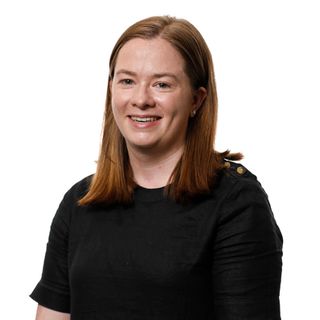
Niamh Lynch
Niamh Lynch is a Teaching Fellow in Accounting at Trinity College Dublin. Niamh is a Chartered Accountant, having completed her training with a Big Four firm. Niamh is currently undertaking her PhD in Accounting, examining how individuals in the Big Four experience institutional logics. Niamh’s teaching responsibilities include undergraduate and postgraduate modules in financial reporting.
© Niamh Lynch
Part of the Pedagogy series
Join the Accounting Cafe community
How to cite this article: Lynch, N. (2025). Moving from accounting practice to academia: Four insights. Accounting Cafe. Available at: https://accountingcafe.org/2025/10/03/practice-to-academia/ Retrieved: [insert date].